

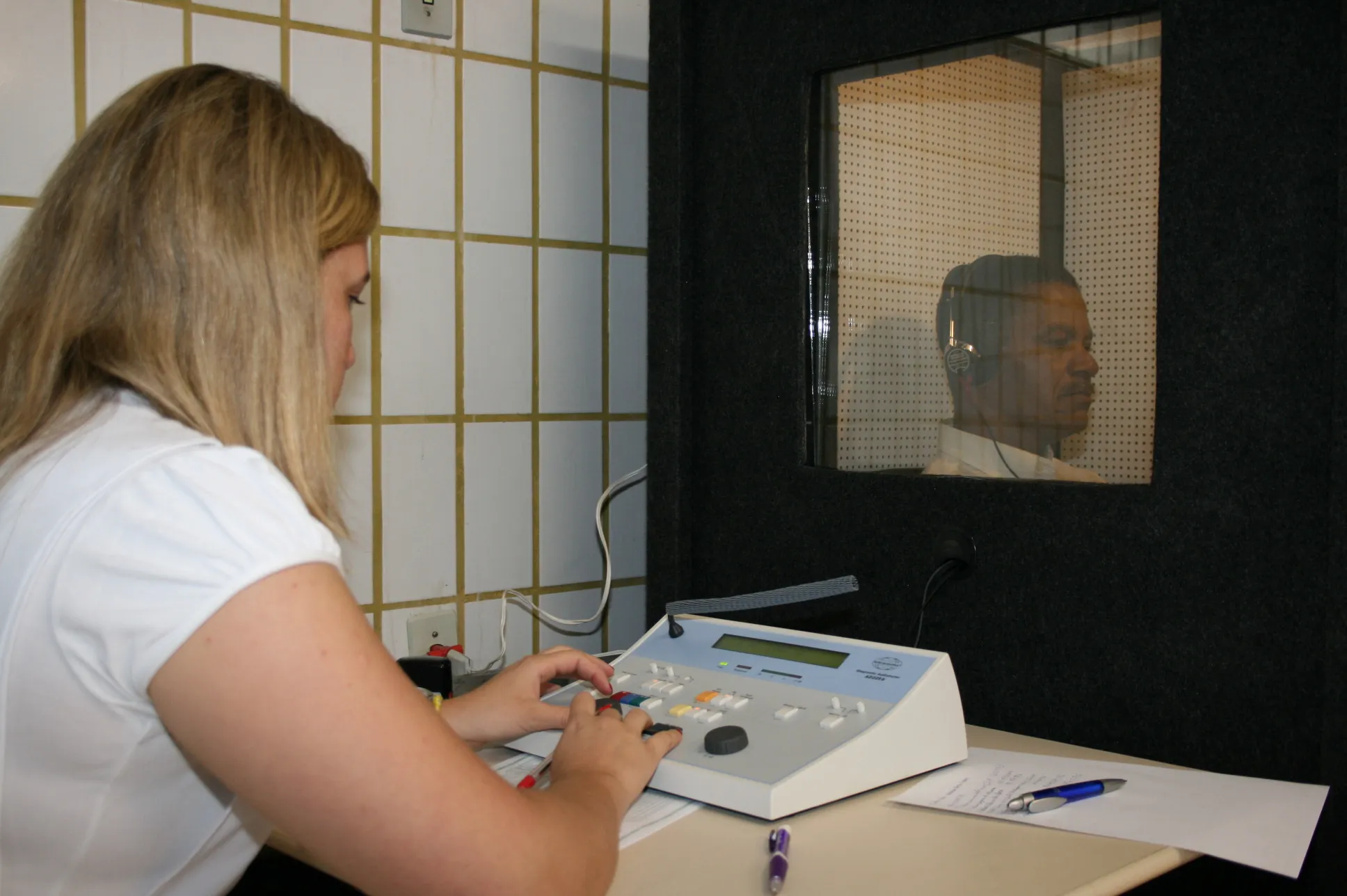
Who should get tested?
If you often ask people to repeat themselves, turn up the TV, struggle to follow conversations in busy places or have ringing in your ears, we recommend a hearing test. Everyone over 50 benefits from regular checks, even without symptoms.
How does the test work?
1. Initial conversation
We talk about your hearing history, where you struggle, your health and your expectations.
2. Ear examination
We look into your ear canal with an otoscope. If there’s something like a wax blockage, we’ll let you know.
3. Pure-tone audiometry
In a sound-treated booth you hear tones at different pitches and volumes through headphones and press a button when you hear them. The result is shown on a chart called an audiogram.
4. Speech audiometry
We measure how clearly you can understand words. This is very important for choosing a device and setting expectations.
5. Going through your results
We review your audiogram together and explain whether you have hearing loss, its type and its degree. Where needed we refer you to an ENT specialist.
Before your visit
- Bring any previous hearing tests and ENT reports.
- Prepare a list of your medications.
- If possible, come with someone who knows you well; their observations are valuable.
- Avoid loud noise for 24 hours beforehand.
What happens next?
If you have hearing loss, we show you suitable options and start your free trial. We also walk you through the report and prescription process for the SGK contribution.